

Medical Technology, Innovation and Design (MSc)
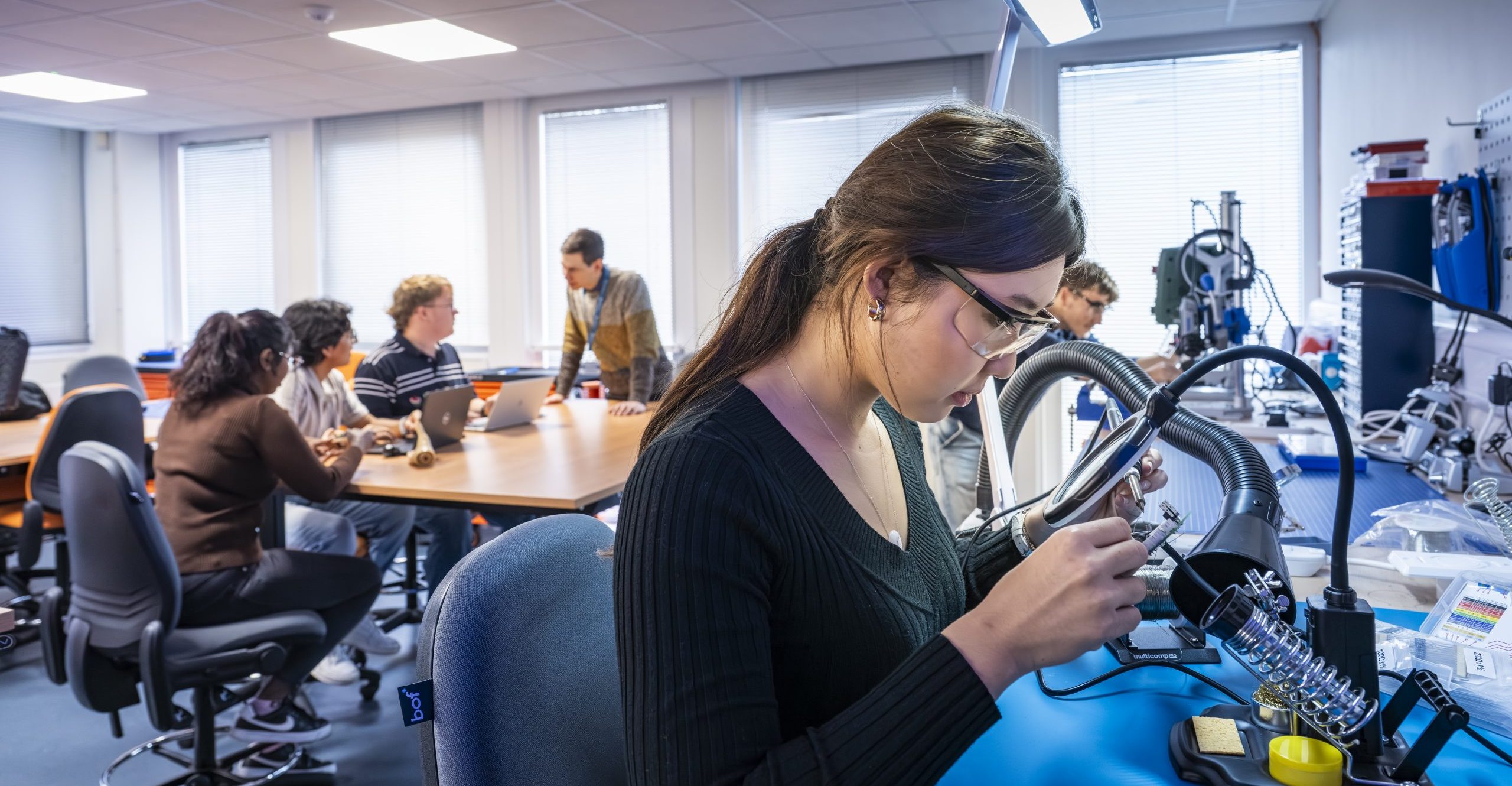
A fast-paced one-year course for people who want to change the future of healthcare. Our MSc brings together students from medicine, engineering, computer science, product design, the life sciences, business and a range of other fields to identify real clinical problems and to create and deliver practical solutions.
Phase 1
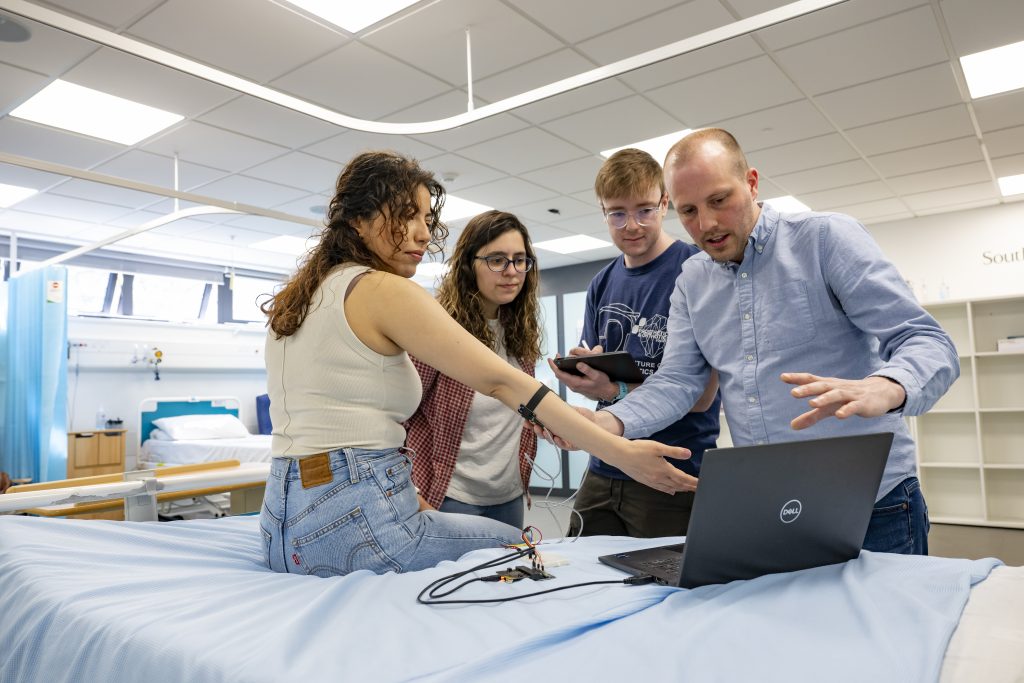
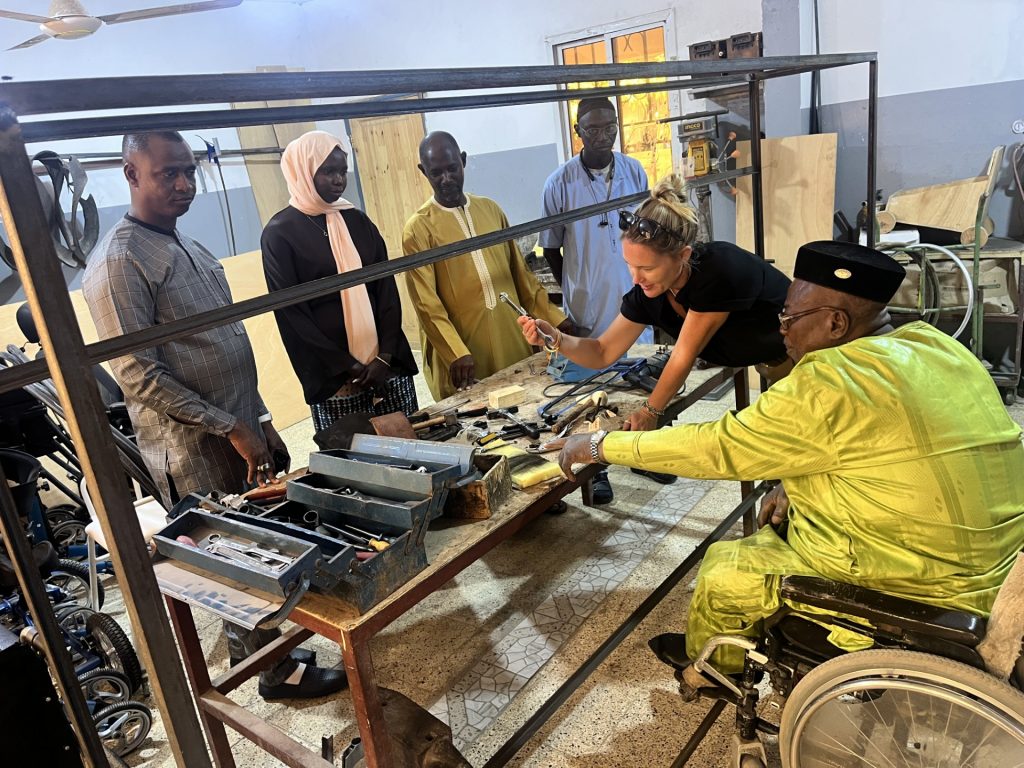
Students shadow frontline services within the UK health system and spend a further month in a hospital outside of the UK that operates under a different healthcare model. In the coming academic year, this will be at the Federal University of Minas Gerais (UFMG).
This provides first-hand insight into how clinicians and patients navigate different structures, resources, and challenges across systems. Both placements are included in the course fees.
Building a global perspective helps students design technologies that work across diverse health systems to maximise their impact and prepares them for careers in the multinational medical technology sector.
Phase 2
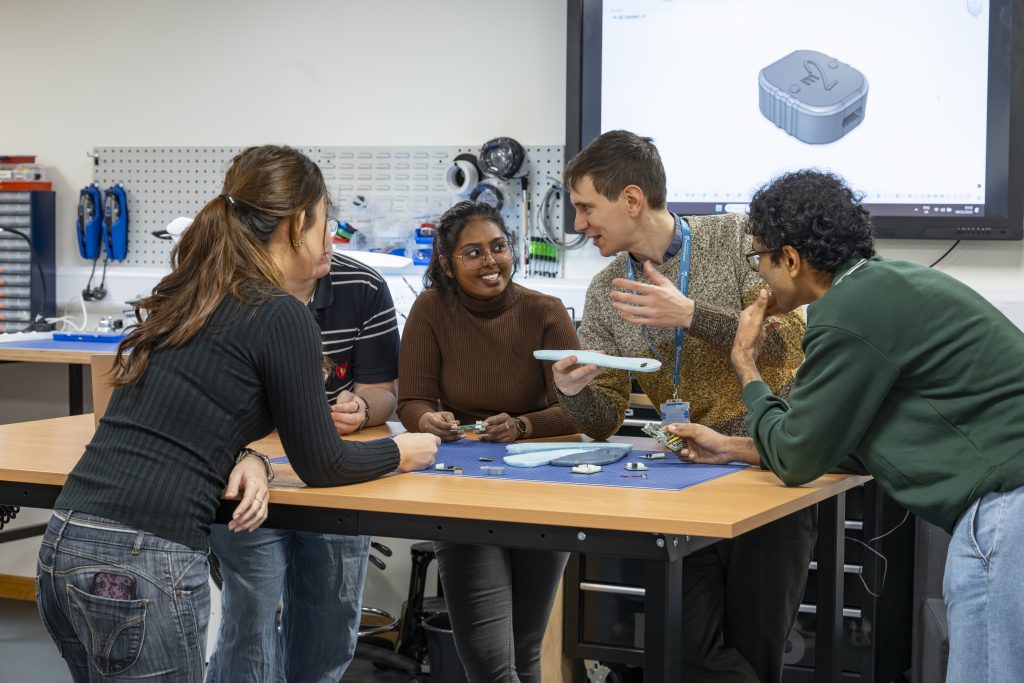

Returning to Southampton, students form small, high-energy multidisciplinary teams to develop a prototype medical device or digital health tool that directly addresses one of the needs they’ve identified. They take their ideas from initial concept to functional prototype.
Students own the intellectual property they generate.
Phase 3

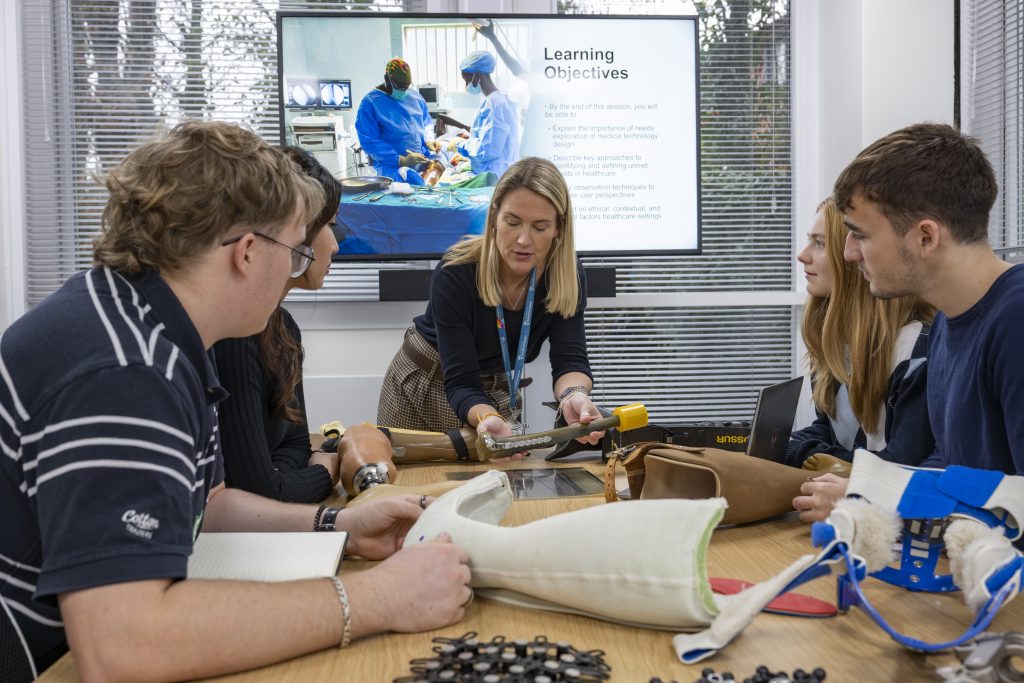
Students then create an impact plan that aligns with their goals. This includes everything needed to turn their innovation into something that makes a difference in the real world, including testing and optimisation, regulatory considerations, and business models or charity pathways.
The advanced skills in collaborative problem-solving students develop are essential for healthcare innovation but rarely taught on postgraduate courses.
Learning from world-leading innovators
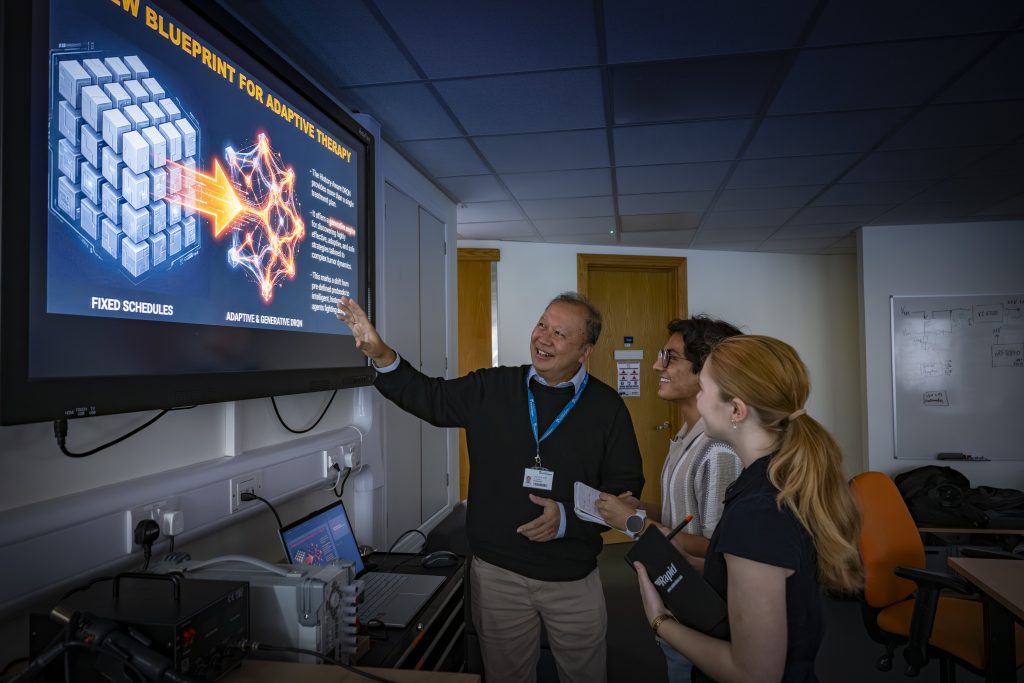
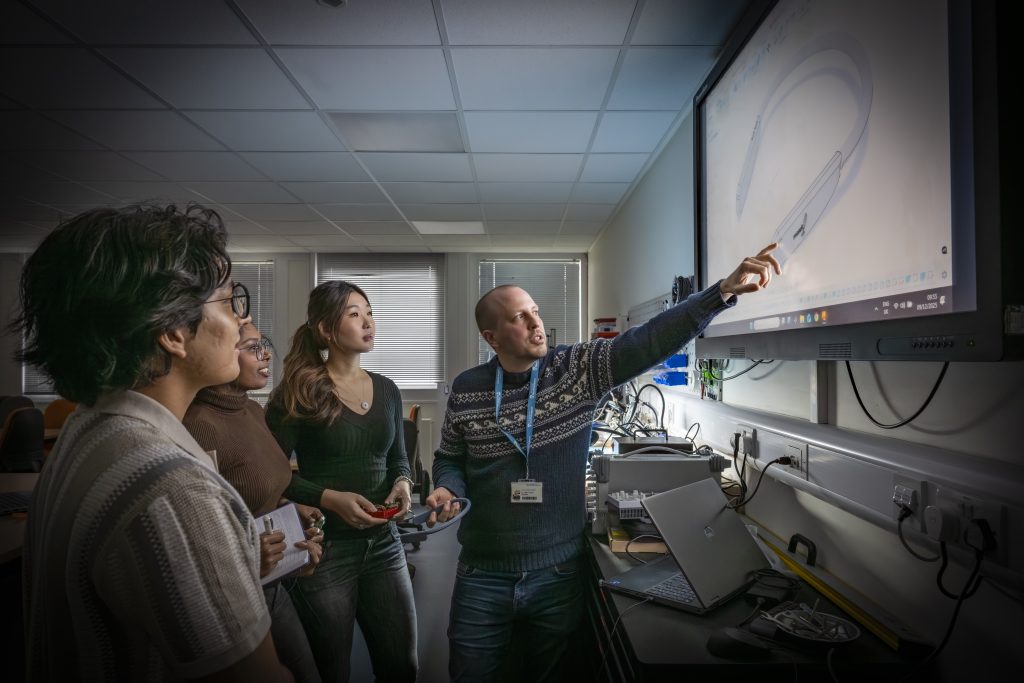
Throughout the programme, students are mentored by leading experts across the spectrum of medical technology and healthcare innovation, including specialists in:
- AI in healthcare
- Wearable and implantable devices
- Upper and lower limb prosthetics
- Software and electronics engineering
- Product design and evaluation
- Health service leadership
- Medical device regulation, intellectual property and patents
- Health entrepreneurship and investment
- Marketing and communication strategy
They also engage directly with industry partners, start-ups, charities and investors who have brought major medical technologies to market.
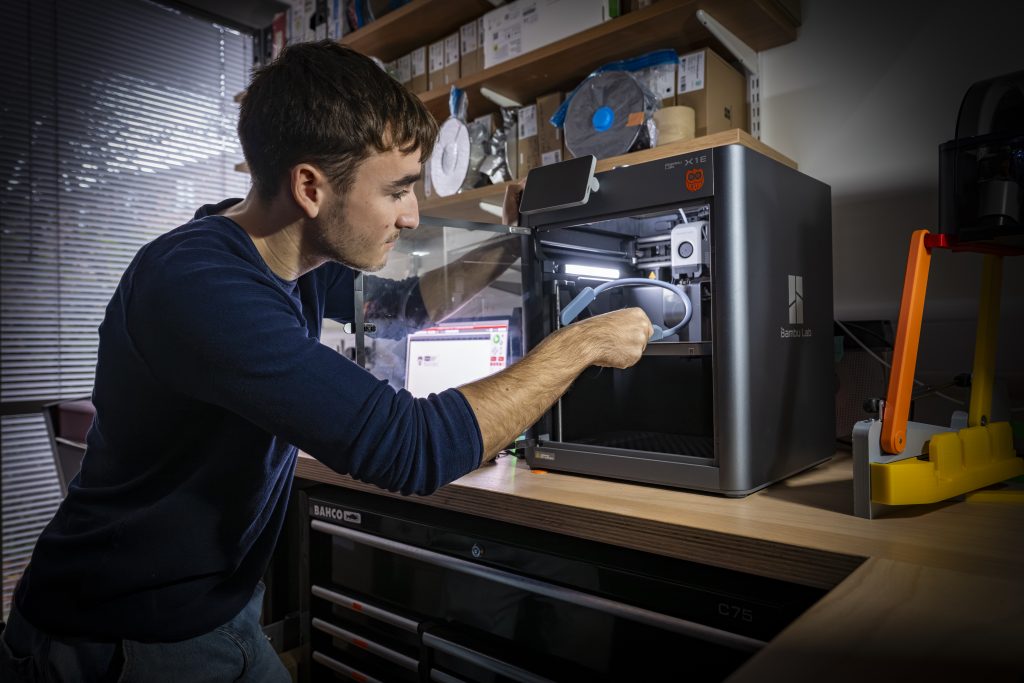
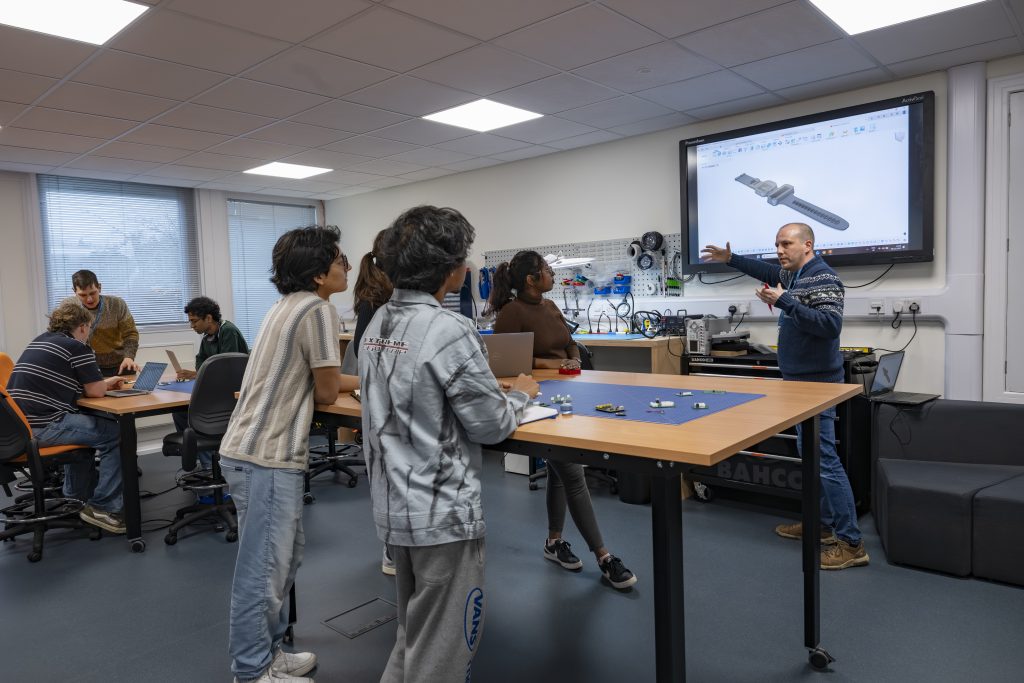
For most of their time, students are based at the University of Southampton Science Park, a unique blend of cutting-edge laboratories, thriving tech start-ups, and the beautiful heritage grounds of Chilworth Manor. Our dedicated design suite includes state-of-the-art 3D printing and electronics prototyping facilities, with a full-time technical specialist on hand to support student work.
After the MSc
The MSc is highly collaborative and intensely practical. It will challenge students, energise them, and set them up to make a meaningful impact in healthcare, whether as an innovator, clinician, engineer, entrepreneur or future industry leader.
The MTID team and the wider University of Southampton ecosystem supports students beyond the course, connecting them with our extensive networks across healthcare, industry, academia, charities, and innovation.
Typical career destinations include:
- Founding or joining a MedTech start-up, using their MTID project as a springboard for commercial or social innovation
- PhD study or research roles in biomedical engineering, health technology, clinical research or related fields (with extensive opportunities at Southampton)
- MedTech and digital health industry positions, including R&D, product development, clinical evaluation, regulatory affairs, user experience, and innovation strategy
- Healthcare innovation roles within health services, including clinical entrepreneurship, service innovation and digital transformation
- Government, policy and non-profit roles in global health, medical technology regulation, innovation policy and health systems strengthening
- Clinical careers, with enhanced capacity for innovation, problem-solving and interdisciplinary collaboration
- Healthcare management and consultancy, particularly in technology adoption, health economics or service improvement
Students’ desired career path may be entrepreneurial, clinical, technical, academic or something unique. Whichever direction they choose, the MTID MSc provides the skills, experience and network to help them thrive.
Student questions answered
What’s it like to be on clinical placement in the UK National Health Service and in the Brazilian health service?
Who is this course for and how is student work assessed?
What kind of career can students have after doing this course & will they own what they invent?
What kind of innovations can students create and is there support available for course fees?