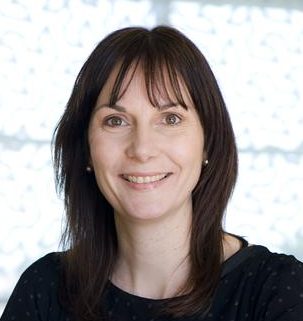
Cheryl is the Executive Director of the MTID MSc programme and the Head of the School of Healthcare Enterprise and Innovation.
She held a prestigious Research Council’s (UK) Roberts’ Fellowship in Life Sciences Interface from 2008-2011. She was the Faculty Director of Enterprise where she worked directly with the Associate Dean of Enterprise to oversee the knowledge exchange and enterprise activity across five schools and two enterprise units. She was also the Director of Enterprise for the School of Health Sciences and is responsible for the strategy development and implementation. She has an international reputation in healthcare innovation and technology as evidenced by numerous guest lectures, keynotes and research collaborations.
She works specifically on the user-led design of innovation in health systems and technology. Over the years, her research has evolved to understand how health systems can and do support the people they serve, whether as a means to implementing new technological solutions to increase access, or by optimising parts of the service working alongside stakeholders. With a diverse background spanning computer science, biomechanics, health sciences and an entrepreneurial spirit, she has developed a unique set of tools to work with stakeholders to understand their needs and support change embedded in values perceived by users and influencers of the health system. She places a particular emphasis on working in a sustainable way with her project partners; always mindful that project research funding is transitory, and uses her experience in value-led design thinking and methods traditionally developed for business planning, to engage stakeholders to work toward transformative, innovative and sustainable health systems. Much of this work is within the amputation rehabilitation and mobility sector, and spans UK and Lower- Middle-Income Country contexts.
Professor Metcalf has a large international network of academic, industrial and clinical contacts. She is an inventor on 3 patent applications and has started two companies; one of which is a global exporter into the Prosthetics & Orthotics sector. She also works as a consultant helping organisations and individuals scope competitor markets to assess viability in new health technology domains.

Susan leads the MTID MSc Programme and is Deputy Head of the School of Healthcare Enterprise and Innovation.
She is an expert in education, public health, strategic planning, management and leadership, as well as marketing and communication.

Simant is an Associate Professor (AI in Medicine and Healthcare) and Deputy Director of the MTID MSc Programme.
His current research focuses on developing next-generation AI technologies for medical device innovation, healthcare applications, and intelligent systems that bridge the gap between academic research and clinical practice.
With a BEng in Electronic Engineering (Medical Electronics) from Thailand’s Chulalongkorn University, he was awarded a prestigious British Government Scholarship to pursue his postgraduate studies at Imperial College London. There, he earned an MSc in Communications and Signal Processing, a DIC (Diploma of Imperial College) in Engineering Applied to Medicine, and a PhD in AI and Computer Vision Applied to Medicine.
Following his PhD, Dr. Prakoonwit held a Postdoctoral Research Associate position at Imperial’s Department of Bioengineering, working on advanced projects funded by the UK Home Office, developing AI-driven security and medical screening technologies. Imperial College patented the work.
Throughout his career, Dr. Prakoonwit has held many academic and leadership positions at several UK universities, including Brunel University, the University of Reading and Bournemouth University. His leadership roles have included Undergraduate Programme Director, Head of Education and Postgraduate Academic Director, where he had strategic oversight of 21 MSc programmes and over 300 students.
As a researcher, Dr. Prakoonwit has almost 70 peer-reviewed publications and 19 funded projects working closely with a diverse range of partners like SMEs, InnovateUK, the NHS and the Guide Dog. His projects involve developing AI for biomedical technologies, AI for various business applications, particularly for SMEs, and biomedical simulations.
He has supervised 16 PhD students (12 as 1st Supervisor and 4 as 2nd Supervisor) and 3 postdoctoral researchers, many of whom have achieved significant recognition, including the Institute of Directors (IoD) Student of the Year Award.
Dr. Prakoonwit’s contributions to the field have been recognised with several awards, including the IEEE Innovation and Creativity Prize for the work on human airways modelling.
He is a Fellow of the Higher Education Academy (FHEA) and Member of IEEE (MIEEE). He also regularly contributes to international conferences and serves on numerous technical and scientific committees. He has examined over 20 PhD theses at institutions including Imperial College London, Swansea University, and the University of Surrey, and serves as an external examiner for degree programmes at universities across the UK, China, and South Africa.

Lucy is a Senior Lecturer on the MTID team, who specialises in global health.
She is a researcher in Global Health, with a particular interest the epidemiology of musculoskeletal health. Her work scales sub-Saharan Africa, in particular South Africa, Zimbabwe and The Gambia, and also Nepal. She is part of a 5 year Wellcome Trust funded study named Epidemiology, Economic impact and Ethnography (the Fractures-E3 study). This is a mixed-methods study aiming to establish frequency of vertebral and hip fractures, risk factors, health costs, consequences, care pathways and available health services. Within this this programme of work she supports the coordination of WP1 (prevalence of vertebral fractures) and WP2 (incidence of hip fractures) in The Gambia, and leads the imaging analysis, which aims to determine the prevalence of vertebral fractures and osteoporosis medical imaging.
she is co-lead on a collaborative initiative with Social Sciences and Engineering to build multi-disciplinary research with the vision of addressing the global impact of lower limb conditions in low resource settings. The initiative has established a programme of research that has i) Estimated the prevalence of LLC in Nepal ii) estimated the individual, societal and healthcare impact of LLCs in Nepal. She now aim to improve the function, activity participation and access to health services of those suffering with lower limb disability in Nepal, through enhancing the provision of assistive devices. Through building engineering capacity among local trades and citizens and developing sustainable methods of local assistive device production and engaging with central and local rehabilitation services, including physiotherapy and prosthetics and orthotics, we aim to strengthen the engagement of communities including trade and heath care providers to become a vital part of the access to assistive devices in resource-poor settings.
She is a podiatrist by clinical background and maintain an active interest in all aspects of lower limb health.
She is an advocate for a positive and healthy institutional research culture, which is reflected in my ongoing contributions to the Concordat for Researcher Development. She contributed to the HR Excellence in Research submission and the University received recognition for our implementation work by retaining the European Commission’s HR Excellence in Research award in 2021. Aligned with this she contributed to a gap analysis; leading an ECR Covid-19 Impact Survey 2020. More recently she was involved with the 2022 Researcher Development Concordat action plan, which addresses the twin submission processes of becoming a Signatory to the 2019 version of the Researcher Development Concordat, and the HREiR award process. She played a key role in supporting and advising the Researcher development and communications work package.

Mark is Senior Lecturer on the MTID team, specialising in wearable technology. He is also part of the Institute of Sound and Vibration Research and Auditory Implant Service.
Mark is head of the EHS Lab, which is involved in a range of research projects, investigating how vibration can be used to enhance speech, music perception, and spatial hearing for people with hearing loss. This includes studies of the limits of the human tactile and auditory systems, work with clinical populations (including cochlear implant users and those with aphasia following stroke), and the development of new haptic technologies to support listening.
The lab is involved in numerous collaborations with other researchers. These include work with colleagues at the University of Rochester (USA) to understand the neural underpinnings of haptic enhancement of hearing, and with researchers at Brighton and Sussex Medical School to develop low-cost bone-conduction hearing devices for use in low-resource settings. The group has also collaborated with acoustics researchers at the Institute of Sound and Vibration Research on the development of a compact, low-cost virtual acoustics system for realistic audiological assessment.

Alix is a Lecturer on the MTID team. She specialises in the translation of healthcare technologies from lab to clinic.
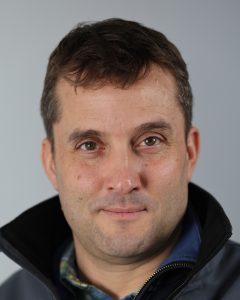
Iain is the Clinical Director of the MTID programme and the Head of Emergency Medicine at University Hospital Southampton.
He has been a consultant in emergency medicine since May 2006, and joined University Hospital Southampton in May 2008. He is also a member of the medical team on the Hampshire and Isle of Wight air ambulance.
Dr Beardsell has broad-based training in emergency medicine, including experience in orthopaedics and trauma, anaesthetics and intensive care medicine and acute medicine. He has worked at major teaching hospitals in the UK, including South Manchester, St Mary’s London (Imperial) and St George’s, London, as well as in Australia at the Prince of Wales Hospital.

Ihor is the Design Suite Manager, looking after our prototyping facilities and providing expert technical support. He is a specialist in compact electronics.

David is a Professor of Innovation on the MTID team.
David is a Chartered Engineer with a BSc in Physics, MSc in Digital Systems, Diploma in Marketing and an MBA. He is Chairman of Governance at the UK Intellectual Property Regulation Board, responsible for regulating UK patent and trademark professions. In his current role as Founder and SETsquared Programme Director, Southampton, David helps early stage businesses to create a business plan, supporting them through the process of gaining funding and helping them develop the commercial skills to drive the business forward. The SETsquared Partnership is the enterprise collaboration between five leading research-intensive universities and is now no.1 worldwide.
David spent his early career working in R&D in signal processing and high performance computing technologies before moving into the mainstream computing industry where he progressed through various sales and management positions. Prior to joining SETsquared, David was founder and MD of a consultancy and solutions company operating in the field of enterprise application integration software.

Ali is a Senior MedTech Fellow on the MTID team.

Kam is an Entrepreneur in Residence on the MTID team.
He is a distinguished executive with over 27 years of experience in the life sciences, pharmaceutical, healthcare, and MedTech sectors. Renowned for bridging academia and industry, particularly in diagnostics and commercialisation, he has driven strategic growth, scaled life science products globally, and mentored emerging founders while fostering innovation ecosystems.
As CEO of Glyconics, Dr Pooni leads an innovative diagnostic university spinout. He also serves as a Non-Executive Director at the University of Southampton Science Park, an Executive Board member of the British In-Vitro Diagnostics Association (BIVDA), and the Royal Society Entrepreneur-in-Residence(Life Sciences) at the University of Southampton.
Dr Pooni’s expertise spans start-up growth, SME scaling, and advancing life science innovations globally. He has held senior commercial roles at Astellas Pharma Europe, Thomson Reuters, and Eli Lilly and actively mentors entrepreneurs at numerous universities and is an Honorary Associate Professor at the University of Birmingham.
A passionate advocate for diversity and inclusion, Dr Pooni was recognised in the 2019 EMPower Top 100 Ethnic Minority Role Models list. Globally connected, he collaborates with organisations such as the National Institute of Health Research (NIHR), Innovate UK, the NHS, and MHRA, shaping healthcare and diagnostics innovation.
With a proven history of scaling life science products, supporting start-ups, and driving systemic growth, Dr Pooni continues to influence the future of healthcare and MedTech innovation.

Sarah Heath